Topics
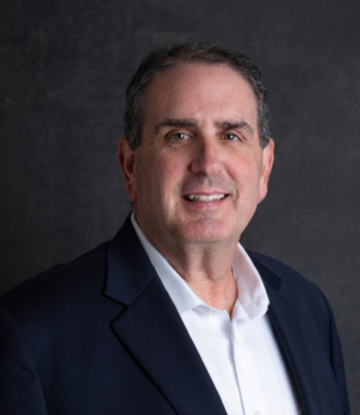
Executive Spotlight: Brad Clark, Vice President, Chief Procurement Officer at Supply Leadership Administration and Management
Supply Chain Scene: Looking back at your career, how did you get to where you are now? Were there any key moments that changed your trajectory or shaped your path?
Brad Clark: If I look back over my career, I've been fortunate to learn from some great people across some very different organizations, and each one taught me something unique.
I often joke that I started with the golden ticket. My first purchasing desk was at what is now RSCS, back then it was Unified Food Service Purchasing Co-op, and I was managing about $50 million in spend. One of my earliest mentors took a chance on me and said, “You understand the co-op and our business model. We can teach you how to buy.” So I started out in the packaging world, and that's what got things moving. By the time I left RSCS after 21 years, I was managing a $4 billion desk. It gave me an incredible foundation in strategic sourcing, supplier management, and cooperative purchasing that I've used throughout my career. At that point, I felt I had accomplished what I set out to do there and was ready for a new challenge. UFPC and Yum operated as a well-oiled machine, and things were running well. From there I moved to P.F. Chang's, and I learned that the scale we had at YUM creates a lot of access. The phone was always answered, people always called me back. At Chang's, I realized that while volume opens doors, credibility and relationships are what keep them open long term.
Then I moved to Captain D's on March 2, 2020. Twelve days later, the whole world shut down. That taught me resilience and creativity, and the need to be adaptable. The majority of Captain D's supply chain was imported, so it was quite a ride.
Now, through SLAM, I have the opportunity to help build an organization from the ground up rather than simply manage an established one. Some people look at it as moving from a bigger company to a smaller one, but I've never seen it that way. I've always seen it as taking what I learned inside world-class organizations and helping other brands build stronger supply chains. Looking back, it's been an interesting ride, and every stop along the way has taught me so much about the business, about myself, and how to move forward.
SCS: You've had a ringside seat to a lot of change, what stands out to you from where you started to where you're headed with SLAM?
BC: I've led through deflation, inflation, COVID, and now launching a purchasing co-op. Every situation was different, but the lesson was really the same: change is something you have to accept. It's not going away, so you have to build an organization that can adapt to it. For me, that means diversified sourcing and strong supplier relationships. Data is becoming more and more critical too, especially with AI and the ability to manage large amounts of data quickly these days. And open communication is key throughout the process. The best supply chains, in my opinion, are built long before the disruption arrives. You've got to lay the foundational blocks first. That's really what all these changes have taught me over the years.
SCS: Denny's has had a lot happen this year, including forming a new co-op and a different business model. What have you learned through that?
BC: The key throughout the Denny’s transition has been transparency. I joined the team in early 2025, when the company had announced plans to close more than 150 restaurants and the stock price was under pressure. Then, just three weeks after I arrived, we were hit with an egg crisis. Later came the sale of the company and the formation of SLAM, which naturally created additional uncertainty. What I learned through all of this was that transparency has to be key not just with our franchisees and corporate stakeholders, but with our team as well. They didn't know me and I didn't know them, so it tore down a lot of walls quickly, but I laid it all out and said, this is what we're dealing with, how are we going to get there, and I need your help because you know Denny's better than I do. I'll bring my 30-plus years of experience and we'll make our way through it together. The team remained largely intact through the transition to SLAM, which speaks to their commitment and to the importance of communicating openly throughout the process.
SCS: How do you feel technology, especially AI, is reshaping supply chain management now and in the future?
BC: As AI evolves and we get a better understanding of how it works, I think it's going to make us better at analyzing information, forecasting demand, and identifying risks at a much more rapid pace than we've been able to in the past, which speeds up how quickly we get to market. It won't replace judgment or relationships, and I don't see it taking over jobs within the supply chain function, which seems to be everyone's concern when you listen to the news. What it will do is make us better and more accurate at what we're doing. There's a tremendous amount of data we can collect these days, and companies like ArrowStream allow us to aggregate it so much faster than when I started 30 years ago. Being able to pull all that together and get an output that actually makes sense is really where I think the technology is headed for us. Where I might have taken four or five data points before AI, now I can take 30 data points, put them together, and pull together a solution much faster than before.
SCS: How do you see the role of supply chain professionals evolving?
BC: Great question. I've seen it evolve more in the last six years than I did in the previous 25. For the first 25 years, we had it pretty easy in supply chain; the last six years have been our time in the barrel, and we've had to adapt significantly. When I started, procurement was measured primarily by cost savings. Today, it's moving toward a more strategic function that can influence profitability, innovation, and growth within brands. I believe in long-term supplier relationships, but I also believe suppliers should continue earning the business every day. Strong relationships don't eliminate accountability, and in my experience, accountability actually strengthens partnerships because both organizations keep pushing each other. As supply chain becomes a more strategic function, you develop those relationships and start looking further into the future, and I see supply chain earning a seat at the executive level, in the C-suite, more than ever before. Take a brand like Denny’s. We are 73 years old and working to reinvent the brand and strengthen its relevance for the future. Supply chain belongs alongside finance, marketing, and operations in determining how we position the business for success, not only in 2026, but in 2030, 2035, and beyond.
SCS: What advice do you have for young people entering foodservice supply chain, and what are your thoughts on mentorship? What skills, hard or soft, do you look for in developing people?
BC: I get this question a lot, and my answer is always: stay curious. Spend time in restaurants, manufacturing plants, distribution centers, and with suppliers. The more you understand about the entire value chain, the better decisions you'll make. I've been through certain facilities in our industry a dozen different times, and I always learn something new, something that may not help me that day, but could help me somewhere down the road. I'd also encourage young professionals to learn how suppliers think. I often say if I could have every buyer spend a year in sales, they'd be much better buyers, because we have to understand what we're asking our supplier representatives to do. They're advocating for us within their own organizations, competing for resources, time, and innovation. If we understand how they think, we can frame our requests in a way that actually fits within their organization. As for mentorship, find someone who will challenge you. One of the key tenets from one of my biggest mentors is to surround yourself with people smarter than you, because growth comes from people who stretch your thinking, not just validate you. I love it when people challenge my thought process and get me thinking differently. It's easy to get complacent and think you've seen everything, but it doesn't take long for someone to remind you that you have to keep growing. So when I talk to young people getting into the business: stay curious, and find people who will challenge you.
SCS: How many times have you attended the Supply Chain Expert Exchange conference?
BC: Oh goodness, probably too many to count. I started back in the mid to late '90s, and I took a little time off in my last few years at Chang's and during COVID at Captain D's. But I find the conference extremely helpful, not just for the content, which continues to grow and stay relevant every year, but for the chance to see old friends, meet new folks, and be challenged in different ways. I think it's very valuable, and I've sent staff in the past too. This year, we promoted a young man just a week before the conference, and I made sure he attended. He was stepping into equipment management, a new area for us at SLAM, and I wanted him to see the depth of knowledge and resources available throughout the industry.